





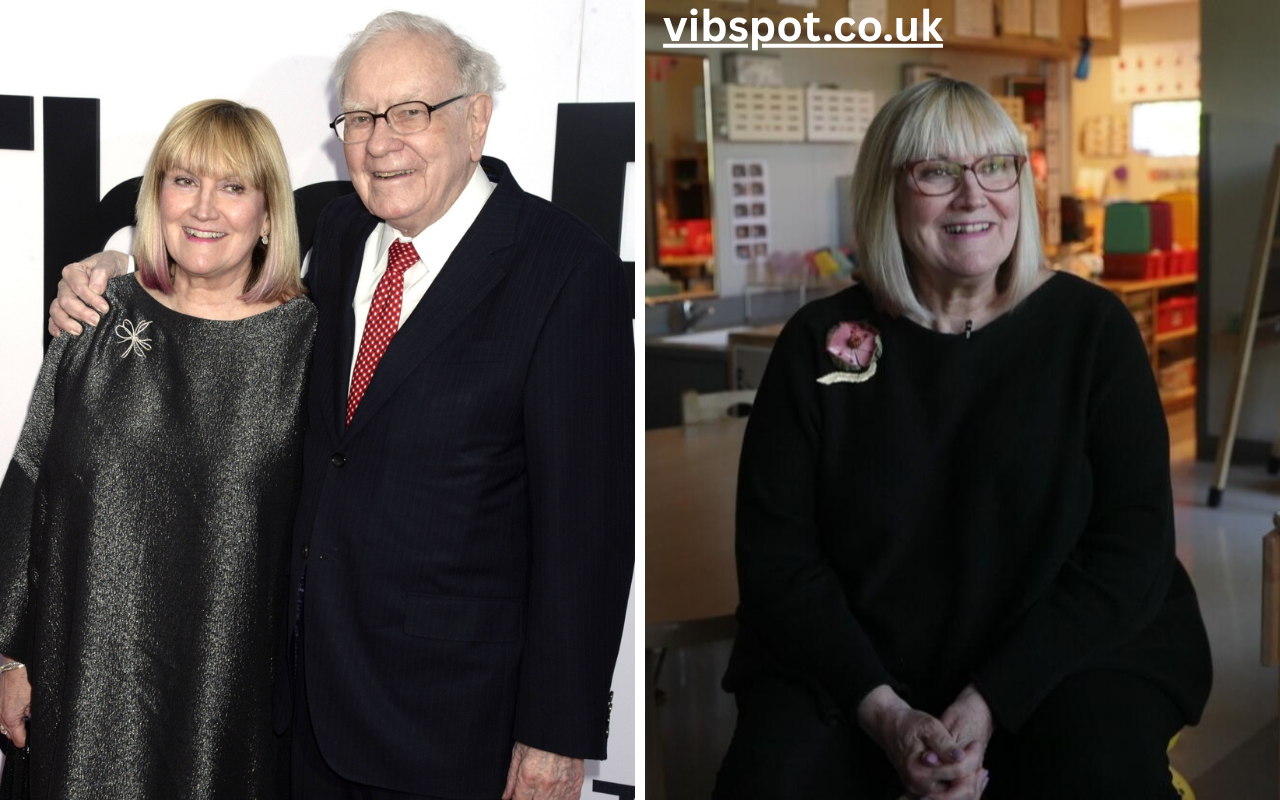
Susan Alice Buffett: Biography, Philanthropy, and Lasting Social Impact
Susan Alice Buffett was born on July 30, 1953, in Omaha, Nebraska, into one of the most influential business families in the world. She is the eldest child of legendary investor Warren Buffett and Susan Thompson Buffett, both of whom shaped her early worldview through discipline, simplicity, and a strong sense of social responsibility. Despite being born into wealth, her upbringing was intentionally grounded and modest.
Her father, Warren Buffett, is known for his disciplined lifestyle and long-term investment philosophy, while her mother was deeply involved in humanitarian and social causes. This combination created a balanced environment where financial intelligence and compassion coexisted. Susan grew up observing both business strategy and community service, which later influenced her own life direction.
From a young age, she was encouraged to think independently and not rely on inherited wealth as a life path. Instead, her parents emphasized education, self-reliance, and contribution to society. These early values became the foundation of her later work in philanthropy and public service.
Education and Formative Years
Susan Alice Buffett pursued her higher education at the University of Nebraska–Lincoln, where she studied home economics. Her academic interests were not limited to traditional subjects but extended toward understanding human behavior, family systems, and social structures. This early education shaped her perspective on community development.
She later attended the University of California, Irvine, where she studied social ecology. This field focuses on how people interact with their environments, including social and economic systems. It helped her develop a deeper understanding of inequality, education gaps, and community challenges.
During her formative years, she developed a strong awareness of how social systems impact individual lives. Her education became more than academic learning; it became a tool for understanding real-world problems. This intellectual foundation later guided her philanthropic decision-making and long-term strategies.
Early Career and Personal Development
Before entering the world of philanthropy, Susan Buffett explored different professional experiences. She worked at Century 21 Real Estate, gaining exposure to business operations and organizational structure. This early job experience gave her practical insights into the working world outside her family’s influence.
She also worked at The New Republic in Washington, D.C., which introduced her to media, politics, and intellectual discourse. This environment allowed her to engage with policy discussions and broaden her understanding of national and global issues. It was a period of growth and exploration for her.
These early career experiences helped her develop independence and confidence. Rather than immediately joining her family’s philanthropic activities, she chose to build her own professional identity first. This decision strengthened her leadership skills and shaped her thoughtful approach to future charitable work.
Entry into Philanthropy
Susan Alice Buffett’s transition into philanthropy was gradual and deeply influenced by her family values. In the 1980s, she began participating in the Buffett family’s charitable activities, learning how foundations operate and how grants are distributed. This exposure marked the beginning of her long-term commitment to social impact.
Her early philanthropic focus was on education and community welfare. She believed that addressing root causes, rather than symptoms, was essential for meaningful change. This perspective guided her involvement in programs that targeted children, families, and underserved communities.
Over time, she became more actively involved in decision-making processes within family foundations. Her role expanded from participation to leadership, allowing her to influence funding priorities and long-term strategies. This shift marked her emergence as a serious philanthropic leader.
Sherwood Foundation and Community Work
One of Susan Buffett’s most important contributions is the establishment of the Sherwood Foundation in 1999. This foundation is dedicated primarily to improving the quality of life in Nebraska, especially in Omaha, where she grew up. Its mission focuses on education, social justice, and community development.
The Sherwood Foundation has supported numerous local organizations that work on poverty reduction, early childhood education, and nonprofit capacity building. It plays a major role in strengthening community institutions and ensuring that resources reach those who need them most.
A key aspect of her approach through Sherwood is local impact. Instead of spreading resources widely, the foundation concentrates on specific regions to create deeper and more sustainable change. This focused strategy has made the foundation highly effective in addressing community-level challenges.
Buffett Early Childhood Fund
In 2005, Susan Alice Buffett founded the Buffett Early Childhood Fund, which reflects her strong belief in the importance of early education. She recognized that the first years of a child’s life are critical for long-term cognitive and social development.
The fund supports programs that improve early childhood education systems, particularly for children from low-income families. It invests in research, teacher training, and policy development to ensure children receive quality learning experiences from the beginning of their lives.
Her work in this area aligns with global research showing that early education significantly improves life outcomes. By focusing on this stage, she aims to reduce inequality and create opportunities that can last a lifetime for children across different communities.
Leadership in Buffett Family Foundations
Susan Buffett also plays a key leadership role in the Susan Thompson Buffett Foundation, one of the largest private philanthropic organizations in the United States. As chairperson, she helps guide its mission, strategy, and grantmaking priorities.
The foundation supports a wide range of causes, including reproductive health, education, and global development. Its impact extends beyond the United States, reaching international programs that address poverty and access to healthcare services.
Her leadership reflects careful planning and long-term thinking. She works alongside her siblings to ensure that the Buffett family’s wealth is distributed effectively and responsibly. This responsibility places her at the center of one of the most influential philanthropic networks in the world.
Philanthropic Philosophy and Impact
Susan Alice Buffett’s philanthropic philosophy is built on focus, discipline, and long-term impact. She believes that meaningful change happens when resources are concentrated on specific problems rather than scattered across many areas. This approach reflects her father’s investment mindset applied to social good.
She often emphasizes collaboration with local organizations, ensuring that solutions are practical and community-driven. Her strategy involves listening to stakeholders, understanding local needs, and supporting initiatives that already have strong foundations.
Her impact can be seen in education reform, early childhood development, and community strengthening. Through her leadership, millions of dollars have been directed toward programs that aim to reduce inequality and improve access to opportunities for underserved populations.
Read More: Jerónimo Luna: Life, Family Legacy, and Emerging Journey in Entertainment
Personal Life and Legacy
Susan Alice Buffett has maintained a relatively private personal life despite her public role in philanthropy. She was previously married to Allen Greenberg, and together they were involved in early nonprofit work. She is also a mother, and her family experiences have influenced her focus on children’s welfare.
Her personal values remain closely aligned with simplicity, responsibility, and service. Unlike many individuals associated with vast wealth, she has consistently emphasized humility and purpose over public recognition. This approach has strengthened her credibility in the philanthropic world.
Today, Susan Alice Buffett is recognized as a major figure in American philanthropy. Her legacy is defined not only by her family name but by her own contributions to education, community development, and social reform. Her work continues to shape how modern philanthropy addresses long-term societal challenges.