




Explore Florence Pugh Oppenheimer as Jean Tatlock, her performance in Christopher Nolan’s film, career journey, and critical impact in this detailed SEO article.
florence pugh oppenheimer appearance in Oppenheimer marked another significant step in her evolving Hollywood career. Known for her emotional depth and fearless acting choices, she joined Christopher Nolan’s historical epic as Jean Tatlock, a complex real-life figure connected to J. Robert Oppenheimer’s personal and political life. Even though her screen time is limited, her role carries emotional and narrative weight that supports the film’s deeper themes.
The film Oppenheimer explores the life of the theoretical physicist J. Robert Oppenheimer and the development of the atomic bomb during World War II. Within this intense historical backdrop, Florence Pugh’s character represents a crucial emotional thread that connects science, politics, and personal conflict. Her presence adds a human dimension to a story largely driven by science and global consequences.
Florence Pugh’s involvement in the film also reflects Christopher Nolan’s tendency to cast actors who can deliver powerful performances even in short but meaningful appearances. In Oppenheimer, every character contributes to the psychological and moral complexity of the narrative, and Pugh’s role as Jean Tatlock is no exception.
Florence Pugh Early Life and Acting Foundations
Florence Pugh was born in Oxford, England, and grew up in a creative environment that influenced her passion for acting. From an early age, she showed strong interest in performance, often participating in school plays and small productions. Her natural confidence and emotional expressiveness quickly set her apart from her peers.
Her professional acting journey began when she was still a teenager, and she landed her first major role in The Falling. This early experience introduced her to the challenges of film acting and helped her develop a grounded understanding of character work. Despite being young, she demonstrated maturity in interpreting emotionally complex roles.
Over time, Florence Pugh continued to refine her craft through diverse projects in British cinema. Her early foundation in independent films helped her build a reputation for authenticity, which later became a defining feature of her performances in larger international productions.
Rise to Fame and Breakthrough Hollywood Success
Florence Pugh’s rise to global recognition came through a series of powerful performances in both independent and mainstream films. Her role in Lady Macbeth showcased her ability to portray emotionally intense and morally complex characters. This performance gained critical attention and positioned her as one of the most promising young actors in the industry.
She gained even wider recognition through films like Midsommar and Little Women. In Midsommar, she delivered a haunting portrayal of grief and psychological distress, while in Little Women, she earned an Academy Award nomination for her role as Amy March. These performances highlighted her versatility and emotional range.
By the time she joined major franchises and high-budget productions, Florence Pugh had already established herself as a serious dramatic talent. Her transition into Hollywood blockbusters felt natural because she had already proven her ability to handle both intimate storytelling and large-scale narratives.
Christopher Nolan’s Oppenheimer and Story Overview
Oppenheimer, directed by Christopher Nolan, is a historical drama that explores the creation of the atomic bomb and its moral consequences. The film focuses on the life of J. Robert Oppenheimer, played by Cillian Murphy, and the scientific and political tensions surrounding the Manhattan Project.
The movie is known for its non-linear storytelling, deep philosophical themes, and visually intense direction. Nolan uses multiple timelines to explore Oppenheimer’s personal life, scientific achievements, and later political struggles during the Cold War era. The film blends historical accuracy with emotional storytelling.
Within this complex narrative, every supporting character plays a significant role in shaping Oppenheimer’s worldview. Florence Pugh’s character, Jean Tatlock, becomes an important emotional anchor that helps reveal the physicist’s internal conflicts and personal vulnerabilities.
Jean Tatlock Character and Historical Importance
Jean Tatlock was a real historical figure and a psychiatrist who had a romantic relationship with J. Robert Oppenheimer. In Oppenheimer, Florence Pugh portrays her as a deeply intellectual and emotionally complex character whose influence extends beyond personal relationships into political implications.
Tatlock was also associated with left-wing political movements, which later became a point of controversy during the Red Scare. Her character in the film reflects both her intellectual independence and the social pressures she faced during a politically charged era in American history.
In the narrative, Jean Tatlock represents more than just a romantic interest. She symbolizes the emotional and ideological conflicts that shaped Oppenheimer’s life, making her a crucial part of understanding the human side of one of history’s most significant scientific figures.
Florence Pugh’s Performance in Oppenheimer
Florence Pugh’s performance as Jean Tatlock is subtle yet impactful. Even with limited screen time, she manages to bring emotional depth and authenticity to the character. Her portrayal focuses on internal emotion rather than dramatic expression, which aligns with the tone of Nolan’s storytelling style.
She captures the complexity of a woman who is both intellectually strong and emotionally vulnerable. Her scenes with Cillian Murphy are carefully constructed to reflect tension, intimacy, and ideological contrast, adding layers to the film’s emotional structure.
Critics and audiences noted that Pugh’s performance stands out because of its restraint and intensity. Instead of relying on dialogue-heavy scenes, she uses expressions, silence, and presence to communicate the character’s inner world effectively.
Chemistry with Cast and Production Experience
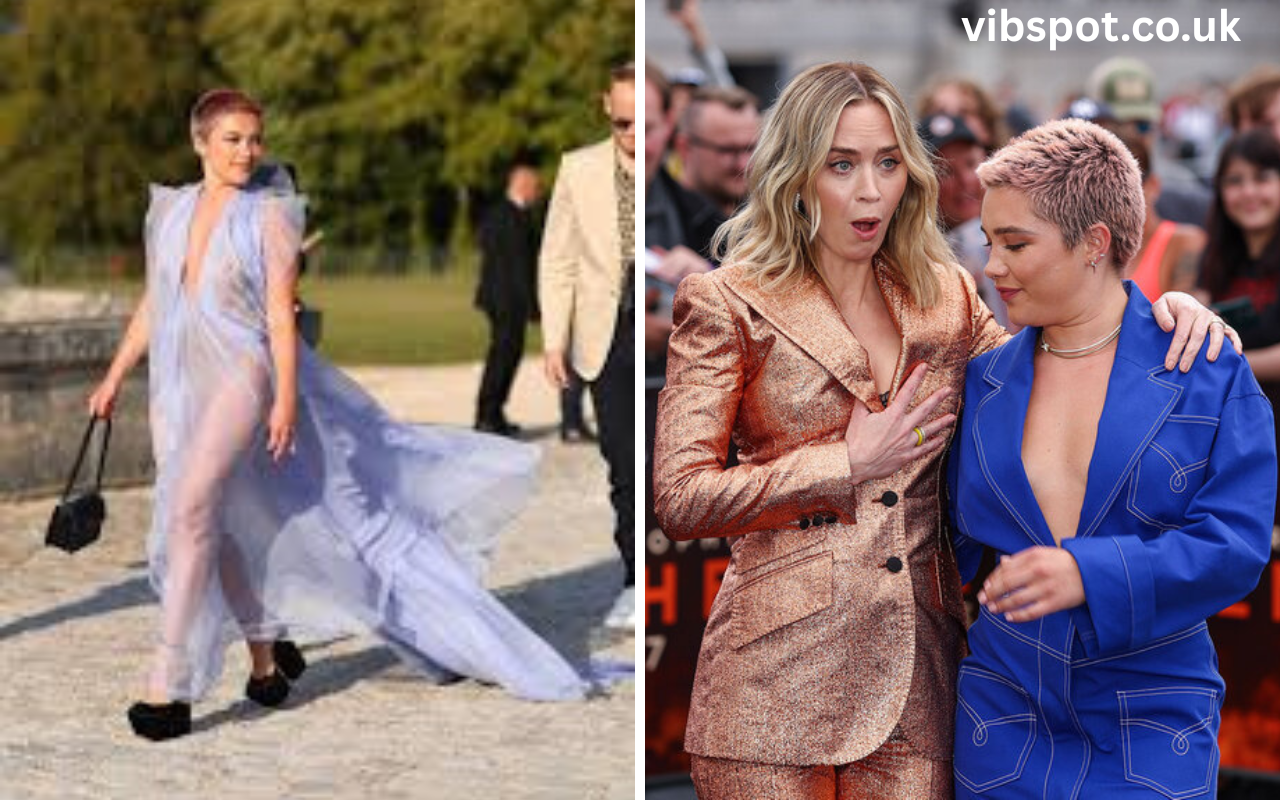
Florence Pugh worked alongside a highly experienced ensemble cast in Oppenheimer, including Cillian Murphy, Emily Blunt, Robert Downey Jr., and Matt Damon. The film’s collaborative environment required strong chemistry among actors to maintain narrative cohesion.
Her interactions with Cillian Murphy, in particular, are central to her role. Their shared scenes highlight emotional tension and intellectual conflict, contributing to the film’s exploration of personal relationships within historical events. The chemistry between them enhances the emotional realism of the story.
Behind the scenes, working under Christopher Nolan’s direction meant adapting to a precise and detail-oriented filmmaking style. Pugh’s professionalism and adaptability allowed her to seamlessly integrate into the film’s demanding production environment.
Critical Reception of Florence Pugh in Oppenheimer
The critical response to Florence Pugh’s performance in Oppenheimer was largely positive, even though her role was relatively small compared to other cast members. Many reviewers praised her ability to make a strong impression in limited screen time.
Her portrayal of Jean Tatlock was described as emotionally resonant and essential to understanding Oppenheimer’s personal struggles. Critics highlighted how her presence adds emotional balance to the film’s heavy scientific and political themes.
Audience reactions also reflected appreciation for her performance, with many viewers noting that her scenes provided some of the film’s most emotionally engaging moments. This further reinforced her reputation as an actor capable of elevating any role she takes on.
Impact on Florence Pugh’s Career and Future Legacy
Florence Pugh’s role in Oppenheimer contributes to her growing legacy as one of the most versatile actors of her generation. Even though it is not a leading role, it adds to her portfolio of high-quality, critically acclaimed projects.
Her career trajectory shows a consistent pattern of choosing meaningful and challenging roles across genres. From independent films to major Hollywood productions, she continues to balance artistic depth with mainstream appeal.
As her career progresses, her performance in Oppenheimer will likely be remembered as part of her transition into long-term Hollywood influence. It reinforces her ability to leave a lasting impact regardless of screen time or role size.
Read More: Kylie Jenner Timothée Chalamet Relationship: Inside the Most Talked-About Modern Celebrity Romance
Conclusion: Florence Pugh’s Role in Oppenheimer and Cinematic Importance
Florence Pugh’s portrayal of Jean Tatlock in Oppenheimer demonstrates her ability to bring emotional depth and realism to historically inspired characters. Even within a large ensemble cast, she manages to create a memorable and meaningful presence.
Her performance adds an essential human layer to Christopher Nolan’s complex historical narrative, helping audiences connect emotionally with the broader themes of science, politics, and personal conflict. This makes her contribution valuable despite its brevity.
Ultimately, Florence Pugh’s role in Oppenheimer reinforces her position as a powerful and respected actress in modern cinema. Her continued success suggests that she will remain a significant figure in both independent and blockbuster filmmaking for years to come.